
Our Umrah Services
Arrangement of Umrah visa.
Arrangement of confirmed return tickets on air line.
Provision of Islamic literature on Umrah.
Transportation from Jeddah air port to accommodation.
Arrangement of transport between Makkah & Madinah.
At the end arrangement of transport to Jeddah.
Provision of accommodation in walking distance of Haram. Only those places are hired which are registered with Saudi Government. These buildings will have all basic residential Facilities In these buildings there will be separate arrangement for Male & Females.
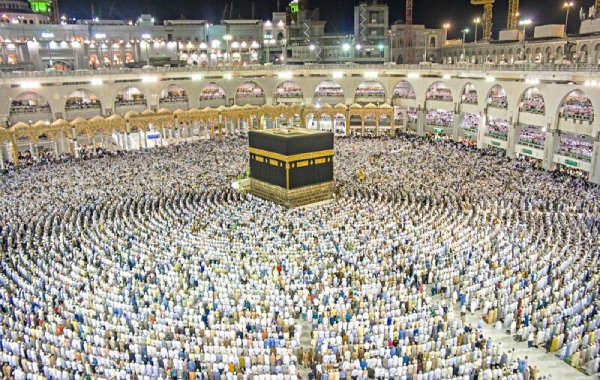
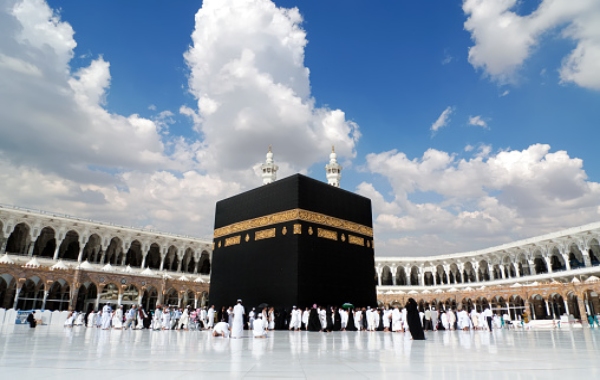
Umrah Terms
All Rates are Per Person Basis & Package rates do not include airline tickets.
All rates are in PAK Rupees (PKR).
While all out efforts will be made to meet passenger requirements, sometimes an alternate hotel with similar type of rooms may have to be offered, any rate difference will be charged accordingly.
Any un-used portion of package services will be non-refundable.
In case of any delay or change in booked travel dates, hotel cancellation charges applied by the vendor will be payable by customer.
Hotel will be booked as per normal check in/check out timing in K.S.A & any special requests in this regard or room view must be specified at the time of package request.
Umrah performed during Ramadan

Umrah may be performed at any time of the year. Umrah performed during Ramadan is considered equal to performing Hajj and offers the same rewards. Nevertheless, performing Umrah during Ramadan is not a substitute for Hajj, the performance of which is mandatory (fard) for all Muslims at least once in a lifetime, if they are physically and financially able.
To perform Umrah, you should be in a state of Ihram. Ihram is a state of purity and holiness. A man in Ihram is called muhrim; a woman is called muhrima. The word Ihram is also used to denote the garment worn by pilgrims when in the state of Ihram.
Men garb themselves in a white, seamless, two-piece garment. The top garment covers the torso but, during Umrah and Hajj, not necessarily the right shoulder. The lower garment covers from waist to knee. Women wear long white robes which cover them from head to toe. All wear sandals, rather than shoes. To enter Ihram, pilgrims must wash themselves. A man may trim his hair and cut his nails.
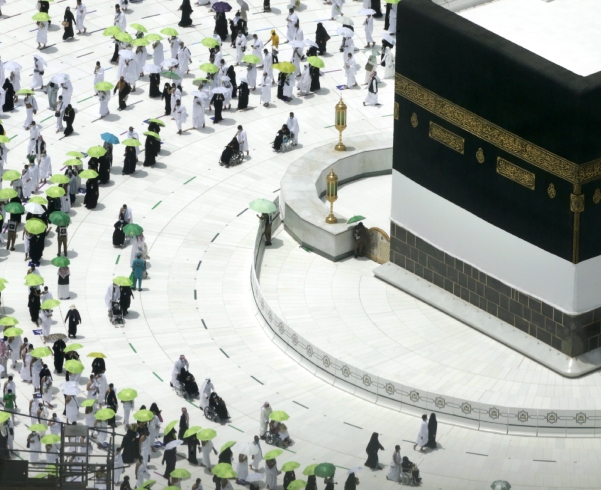
During Ihram, sexual activity, shaving, and cutting one’s nails or skin all are forbidden. There are also prohibitions against killing animals, except those that can harm people, fighting or quarreling, using perfumes, washing hair with shampoo, wearing gloves or socks, or uprooting oats or trees.
Those who do these knowingly or unknowingly or by forgetting have to pay a penalty by sacrificing an animal or giving alms. There are five places some distance from the Holy City of Makkah which pilgrims must not cross before they are in a state of Ihram if they intend to enter al Masjid al Haram for Umrah or Hajj. These points or stations are called Miqats. For map, see Location of Miqats Dhu’l-Hulayfah:

Iqats Dhu’l-Hulayfah

Dhu’l-Hulayfah

Juhfah
Qarn al-Manazil
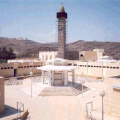
Yalamlam
